주메뉴
- About IBS 연구원소개
-
Research Centers
연구단소개
- Research Outcomes
- Mathematics
- Physics
- Center for Underground Physics
- Center for Theoretical Physics of the Universe (Particle Theory and Cosmology Group)
- Center for Theoretical Physics of the Universe (Cosmology, Gravity and Astroparticle Physics Group)
- Dark Matter Axion Group
- Center for Artificial Low Dimensional Electronic Systems
- Center for Quantum Nanoscience
- Center for Exotic Nuclear Studies
- Center for Van der Waals Quantum Solids
- Center for Relativistic Laser Science
- Chemistry
- Life Sciences
- Center for Memory and Glioscience (Cognitive Glioscience Group)
- Center for Memory and Glioscience (Learning and Memory Group)
- Center for Synaptic Brain Dysfunctions
- Center for RNA Research
- Center for Genomic Integrity
- Center for Vascular Research
- Center for Genome Engineering
- Center for Microbiome–Body–Brain Physiology
- Earth Science
- Interdisciplinary
- Center for Neuroscience Imaging Research (Neuro Technology Group)
- Center for Neuroscience Imaging Research (Cognitive and Computational Neuroscience Group)
- Center for Algorithmic and Robotized Synthesis
- Center for Nanomedicine
- Center for Biomolecular and Cellular Structure
- Center for 2D Quantum Heterostructures
- Institutes
- Korea Virus Research Institute
- News Center 뉴스 센터
- Career 인재초빙
- Living in Korea IBS School-UST
- IBS School 윤리경영

주메뉴
- About IBS
-
Research Centers
- Research Outcomes
- Mathematics
- Physics
- Center for Underground Physics
- Center for Theoretical Physics of the Universe (Particle Theory and Cosmology Group)
- Center for Theoretical Physics of the Universe (Cosmology, Gravity and Astroparticle Physics Group)
- Dark Matter Axion Group
- Center for Artificial Low Dimensional Electronic Systems
- Center for Quantum Nanoscience
- Center for Exotic Nuclear Studies
- Center for Van der Waals Quantum Solids
- Center for Relativistic Laser Science
- Chemistry
- Life Sciences
- Center for Memory and Glioscience (Cognitive Glioscience Group)
- Center for Memory and Glioscience (Learning and Memory Group)
- Center for Synaptic Brain Dysfunctions
- Center for RNA Research
- Center for Genomic Integrity
- Center for Vascular Research
- Center for Genome Engineering
- Center for Microbiome–Body–Brain Physiology
- Earth Science
- Interdisciplinary
- Center for Neuroscience Imaging Research (Neuro Technology Group)
- Center for Neuroscience Imaging Research (Cognitive and Computational Neuroscience Group)
- Center for Algorithmic and Robotized Synthesis
- Center for Nanomedicine
- Center for Biomolecular and Cellular Structure
- Center for 2D Quantum Heterostructures
- Institutes
- Korea Virus Research Institute
- News Center
- Career
- Living in Korea
- IBS School



Research Centers
- Research Outcomes
- Mathematics
- Physics
- Center for Underground Physics
- Center for Theoretical Physics of the Universe (Particle Theory and Cosmology Group)
- Center for Theoretical Physics of the Universe (Cosmology, Gravity and Astroparticle Physics Group)
- Dark Matter Axion Group
- Center for Artificial Low Dimensional Electronic Systems
- Center for Quantum Nanoscience
- Center for Exotic Nuclear Studies
- Center for Van der Waals Quantum Solids
- Center for Relativistic Laser Science
- Chemistry
- Life Sciences
- Center for Memory and Glioscience (Cognitive Glioscience Group)
- Center for Memory and Glioscience (Learning and Memory Group)
- Center for Synaptic Brain Dysfunctions
- Center for RNA Research
- Center for Genomic Integrity
- Center for Vascular Research
- Center for Genome Engineering
- Center for Microbiome–Body–Brain Physiology
- Earth Science
- Interdisciplinary
- Center for Neuroscience Imaging Research (Neuro Technology Group)
- Center for Neuroscience Imaging Research (Cognitive and Computational Neuroscience Group)
- Center for Algorithmic and Robotized Synthesis
- Center for Nanomedicine
- Center for Biomolecular and Cellular Structure
- Center for 2D Quantum Heterostructures
- Institutes
- Korea Virus Research Institute
Center for Microbiome–Body–Brain Physiology

DirectorSUH Seong-Bae
-
DirectorSUH Seong-Bae
Center for Microbiome–Body–Brain Physiology
Tel. +82-62-715-3791
61005 Gwangju, Buk-gu, Cheomdangwagi-ro 123, Gwangju Institute of Science and Technology (GIST), Department of Life Sciences, Geumho Research Building 2nd Floor (S4), 207, 208–209
Major Publications

- - Encoding the glucose identity by discrete hypothalamic neurons via the gut-brain axis.(Neuron, 2025)
- - Response of the microbiome–gut–brain axis in Drosophila to amino acid deficit.(Nature, 2021)
- - A glucose-sensing neuron pair regulates insulin and glucagon in Drosophila.(Nature, 2019)
Director
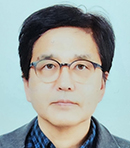
Director SUH Seong-Bae
Professor Suh is a pioneer in the field of sensory and neurophysiology who has elucidated the operating principles of interoceptive sensory neurons connecting the brain and visceral organs. Using fruit fly models, he has precisely characterized the neural circuits linking the brain and gut that regulate feeding, metabolism, and hormone control. His work has been internationally recognized for its originality and scientific impact.
Introduction
Wild animals perceive a wide range of external stimuli and respond appropriately. They also sense internal bodily states, such as hunger, and adjust their behavior accordingly. Our research focuses on how animals respond to both internal and external cues related to feeding behavior. Using two model organisms—fruit flies and mice—we investigate how the gut, brain, and microbiome interact to detect nutrients and drive feeding behavior through neural mechanisms. In fruit flies, we study how various nutrients—ranging from macronutrients such as carbohydrates and proteins to micronutrients such as sodium and vitamin C—are sensed after ingestion and how these signals alter behavior. Based on these findings, our goal is to uncover analogous nutrient-sensing mechanisms in mice. In addition, we are currently examining how interactions along the gut–brain–microbiome axis influence neurological diseases such as Alzheimer’s and Parkinson’s disease in mouse models.
Mainjor Research Activities
Research on the internal sensing mechanisms of essential nutrients such as carbohydrates, proteins, and minerals, and on the functions of neural circuits, investigating how nutritional states are detected in the brain and gut and how this leads to feeding behavior, metabolic homeostasis, and hormone secretion
- 1. Identification and characterization of interoceptive sensors that detect and respond to the nutritional value of food (macronutrients such as carbohydrates, proteins, and fats, as well as micronutrients)
- 2. Elucidation of specific gut–brain pathways that regulate the transmission of diverse physiological signals—including those from the gut microbiome—from the gut to the brain
- 3. Investigation of the mechanisms underlying neurological diseases, such as Parkinson’s and Alzheimer’s disease, that originate in peripheral organs and propagate to the brain
- 4. Development of research resources and technologies to selectively manipulate specific gut cell types, neuronal populations, and the circuits connecting the body and brain
- Content Manager
- :
- Last Update 2026-01-15 16:26
55, Expo-ro, Yuseong-gu, Daejeon, Korea, 34126
Tel. +82-42-878-8114 | Fax. +82-42-878-8079 | E-mail. webmaster@ibs.re.kr
Copyright(c) IBS. All Rights Reserved.