주메뉴
- About IBS 연구원소개
-
Research Centers
연구단소개
- Research Outcomes
- Mathematics
- Physics
- Center for Underground Physics
- Center for Theoretical Physics of the Universe (Particle Theory and Cosmology Group)
- Center for Theoretical Physics of the Universe (Cosmology, Gravity and Astroparticle Physics Group)
- Dark Matter Axion Group
- Center for Artificial Low Dimensional Electronic Systems
- Center for Quantum Nanoscience
- Center for Exotic Nuclear Studies
- Center for Van der Waals Quantum Solids
- Center for Relativistic Laser Science
- Center for Trapped Ion Quantum Science
- Chemistry
- Life Sciences
- Center for Memory and Glioscience (Cognitive Glioscience Group)
- Center for Memory and Glioscience (Learning and Memory Group)
- Center for Synaptic Brain Dysfunctions
- Center for RNA Research
- Center for Genomic Integrity
- Center for Vascular Research
- Center for Genome Engineering
- Center for Microbiome–Body–Brain Physiology
- Earth Science
- Interdisciplinary
- Center for Neuroscience Imaging Research (Neuro Technology Group)
- Center for Neuroscience Imaging Research (Cognitive and Computational Neuroscience Group)
- Center for Algorithmic and Robotized Synthesis
- Center for Nanomedicine
- Center for Biomolecular and Cellular Structure
- Center for 2D Quantum Heterostructures
- Institutes
- Korea Virus Research Institute
- News Center 뉴스 센터
- Career 인재초빙
- Living in Korea IBS School-UST
- IBS School 윤리경영

주메뉴
- About IBS
-
Research Centers
- Research Outcomes
- Mathematics
- Physics
- Center for Underground Physics
- Center for Theoretical Physics of the Universe (Particle Theory and Cosmology Group)
- Center for Theoretical Physics of the Universe (Cosmology, Gravity and Astroparticle Physics Group)
- Dark Matter Axion Group
- Center for Artificial Low Dimensional Electronic Systems
- Center for Quantum Nanoscience
- Center for Exotic Nuclear Studies
- Center for Van der Waals Quantum Solids
- Center for Relativistic Laser Science
- Center for Trapped Ion Quantum Science
- Chemistry
- Life Sciences
- Center for Memory and Glioscience (Cognitive Glioscience Group)
- Center for Memory and Glioscience (Learning and Memory Group)
- Center for Synaptic Brain Dysfunctions
- Center for RNA Research
- Center for Genomic Integrity
- Center for Vascular Research
- Center for Genome Engineering
- Center for Microbiome–Body–Brain Physiology
- Earth Science
- Interdisciplinary
- Center for Neuroscience Imaging Research (Neuro Technology Group)
- Center for Neuroscience Imaging Research (Cognitive and Computational Neuroscience Group)
- Center for Algorithmic and Robotized Synthesis
- Center for Nanomedicine
- Center for Biomolecular and Cellular Structure
- Center for 2D Quantum Heterostructures
- Institutes
- Korea Virus Research Institute
- News Center
- Career
- Living in Korea
- IBS School



News Center

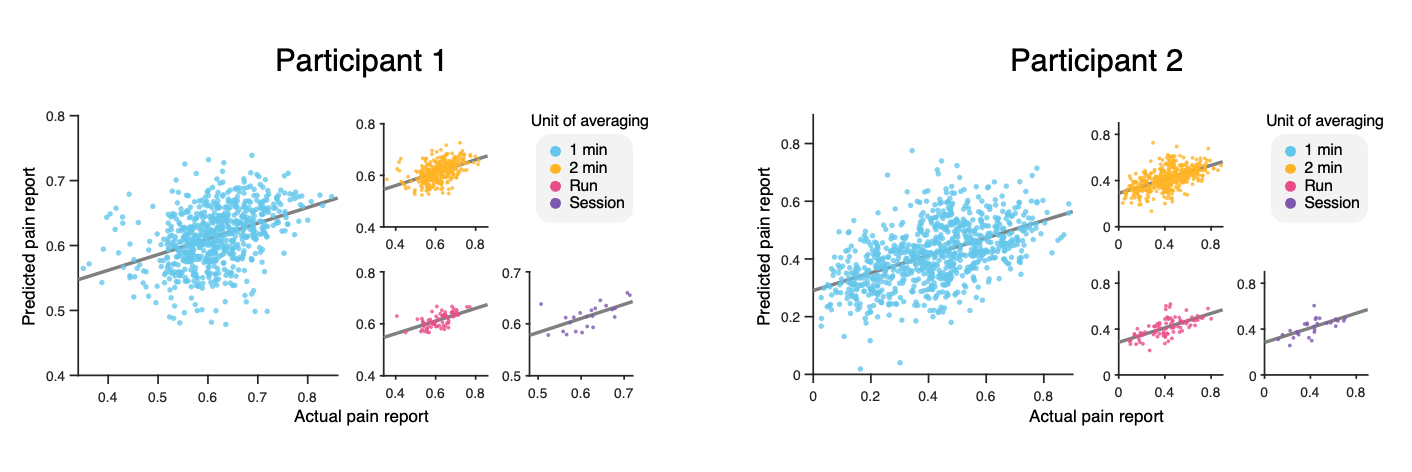
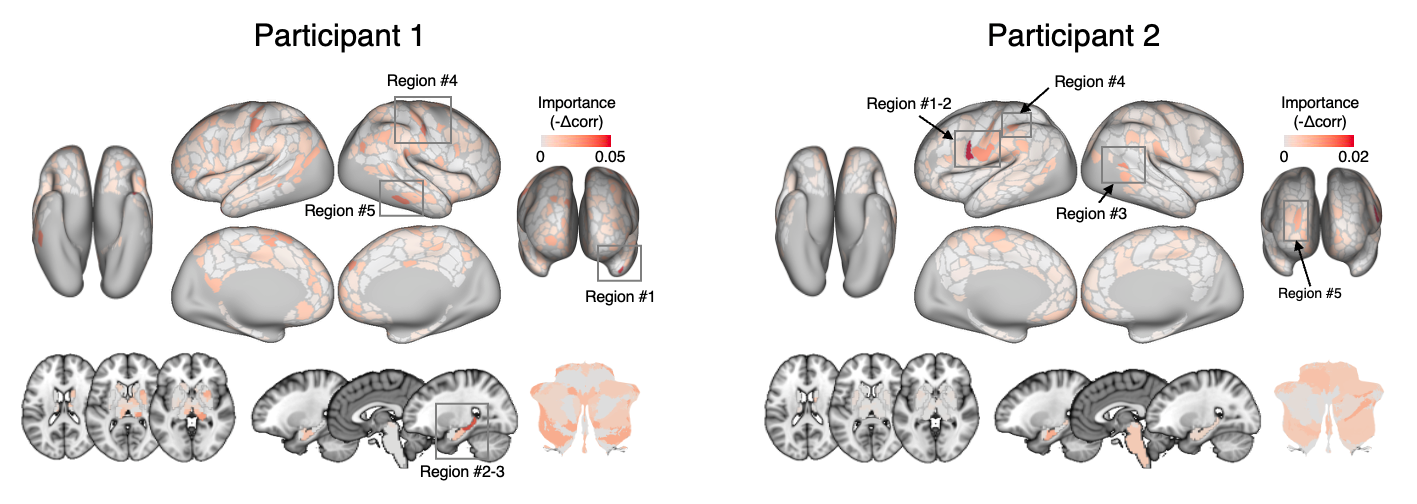
Discovering the “Brain Fingerprints” of Chronic Pain- Personalized Pain Assessment Using Extensively Sampled Functional MRI Data - Chronic pain affects nearly one in five adults worldwide and remains one of the leading causes of disability. Unlike acute pain triggered by injury, chronic pain often arises spontaneously—without an obvious external cause—and fluctuates across minutes, hours, and days. Yet clinicians still rely largely on self-reported pain ratings, as there is currently no objective biomarker comparable to blood pressure or body temperature. Now, a research team led by Associate Director WOO Choong-Wan at the Center for Neuroscience Imaging Research (CNIR) within the Institute for Basic Science (IBS), in collaboration with Professor CHO Sungkun’s team at Chungnam National University, has demonstrated that personalized brain-imaging models can decode fluctuations in spontaneous pain intensity in individuals with chronic pain. To address the challenge of capturing internally generated pain, the researchers conducted an intensive longitudinal study in patients with fibromyalgia, a chronic pain disorder characterized by widespread spontaneous pain. Over more than half a year, participants underwent repeated functional magnetic resonance imaging (fMRI) sessions while continuously reporting their ongoing pain levels. fMRI measures changes in blood oxygenation across the whole brain, allowing researchers to examine patterns of communication between brain regions. Using machine learning techniques applied to these densely sampled datasets, the team developed person-specific brain decoding models capable of predicting each participant’s moment-by-moment pain intensity. The models successfully tracked fluctuations in spontaneous pain across multiple timescales—from minute-level changes within a scan to differences across sessions and days. Importantly, prediction performance improved substantially as more training data were included. Conventional data quantities, typically used in longitudinal neuroimaging studies, were insufficient to achieve reliable predictions. These findings highlight the importance of extensive within-person sampling when developing individualized brain-based biomarkers. A key discovery of the study is that the neural patterns underlying pain differed markedly between individuals. The “pain connectome” identified in one participant did not generalize to another, and cross-testing between participants failed to produce meaningful predictions. This individual specificity suggests that chronic pain is represented through highly personalized brain network configurations, underscoring the limitations of one-size-fits-all biomarkers. Unlike earlier personalized decoding studies that relied on recordings from a limited number of brain regions, the present study leveraged whole-brain functional connectivity, capturing distributed network interactions known to be involved in pain processing. The results demonstrate that spontaneous pain can be tracked using non-invasive neuroimaging, providing proof of principle for precision neuroimaging approaches in chronic pain research. “The fact that pain cannot be seen adds to the suffering of patients with chronic pain,” said Dr. WOO Choong-Wan, Associate Director of IBS CNIR and senior author of the study. “Our findings show that precision neuroimaging may help evaluate invisible pain more objectively at the individual level.” First author LEE Jae-Joong added, “Each participant exhibited a unique brain connectivity pattern associated with pain. Understanding these personalized neural signatures may eventually help guide precision approaches to pain assessment and treatment.” Although the study involved a small number of participants and is not yet ready for clinical application, it establishes a methodological framework for developing patient-specific brain biomarkers. Future research involving larger and more diverse cohorts will be necessary to determine whether subtypes of chronic pain share common neural features or require entirely individualized solutions.
Notes for editors
- References
- Media Contact
- About the Institute for Basic Science (IBS) |
| before |
|---|
- Content Manager
- Public Relations Team : Yim Ji Yeob 042-878-8173
- Last Update 2023-11-28 14:20

55, Expo-ro, Yuseong-gu, Daejeon, Korea, 34126
Tel. +82-42-878-8114 | Fax. +82-42-878-8079 | E-mail. webmaster@ibs.re.kr
Copyright(c) IBS. All Rights Reserved.