주메뉴
- About IBS 연구원소개
-
Research Centers
연구단소개
- Research Outcomes
- Mathematics
- Physics
- Center for Underground Physics
- Center for Theoretical Physics of the Universe (Particle Theory and Cosmology Group)
- Center for Theoretical Physics of the Universe (Cosmology, Gravity and Astroparticle Physics Group)
- Dark Matter Axion Group
- Center for Artificial Low Dimensional Electronic Systems
- Center for Quantum Nanoscience
- Center for Exotic Nuclear Studies
- Center for Van der Waals Quantum Solids
- Center for Relativistic Laser Science
- Center for Trapped Ion Quantum Science
- Chemistry
- Life Sciences
- Center for Memory and Glioscience (Cognitive Glioscience Group)
- Center for Memory and Glioscience (Learning and Memory Group)
- Center for Synaptic Brain Dysfunctions
- Center for RNA Research
- Center for Genomic Integrity
- Center for Vascular Research
- Center for Genome Engineering
- Center for Microbiome–Body–Brain Physiology
- Earth Science
- Interdisciplinary
- Center for Neuroscience Imaging Research (Neuro Technology Group)
- Center for Neuroscience Imaging Research (Cognitive and Computational Neuroscience Group)
- Center for Algorithmic and Robotized Synthesis
- Center for Nanomedicine
- Center for Biomolecular and Cellular Structure
- Center for 2D Quantum Heterostructures
- Institutes
- Korea Virus Research Institute
- News Center 뉴스 센터
- Career 인재초빙
- Living in Korea IBS School-UST
- IBS School 윤리경영

주메뉴
- About IBS
-
Research Centers
- Research Outcomes
- Mathematics
- Physics
- Center for Underground Physics
- Center for Theoretical Physics of the Universe (Particle Theory and Cosmology Group)
- Center for Theoretical Physics of the Universe (Cosmology, Gravity and Astroparticle Physics Group)
- Dark Matter Axion Group
- Center for Artificial Low Dimensional Electronic Systems
- Center for Quantum Nanoscience
- Center for Exotic Nuclear Studies
- Center for Van der Waals Quantum Solids
- Center for Relativistic Laser Science
- Center for Trapped Ion Quantum Science
- Chemistry
- Life Sciences
- Center for Memory and Glioscience (Cognitive Glioscience Group)
- Center for Memory and Glioscience (Learning and Memory Group)
- Center for Synaptic Brain Dysfunctions
- Center for RNA Research
- Center for Genomic Integrity
- Center for Vascular Research
- Center for Genome Engineering
- Center for Microbiome–Body–Brain Physiology
- Earth Science
- Interdisciplinary
- Center for Neuroscience Imaging Research (Neuro Technology Group)
- Center for Neuroscience Imaging Research (Cognitive and Computational Neuroscience Group)
- Center for Algorithmic and Robotized Synthesis
- Center for Nanomedicine
- Center for Biomolecular and Cellular Structure
- Center for 2D Quantum Heterostructures
- Institutes
- Korea Virus Research Institute
- News Center
- Career
- Living in Korea
- IBS School



News Center

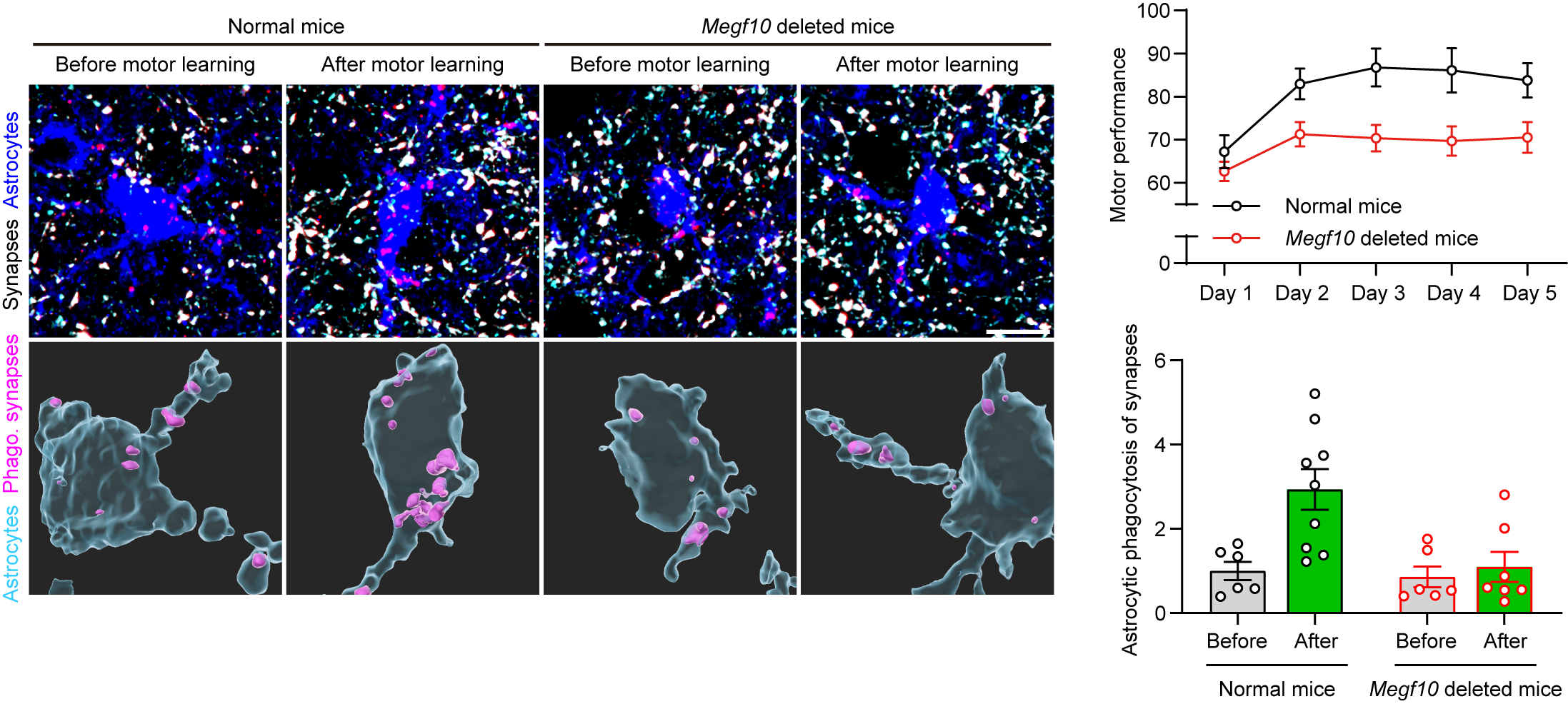
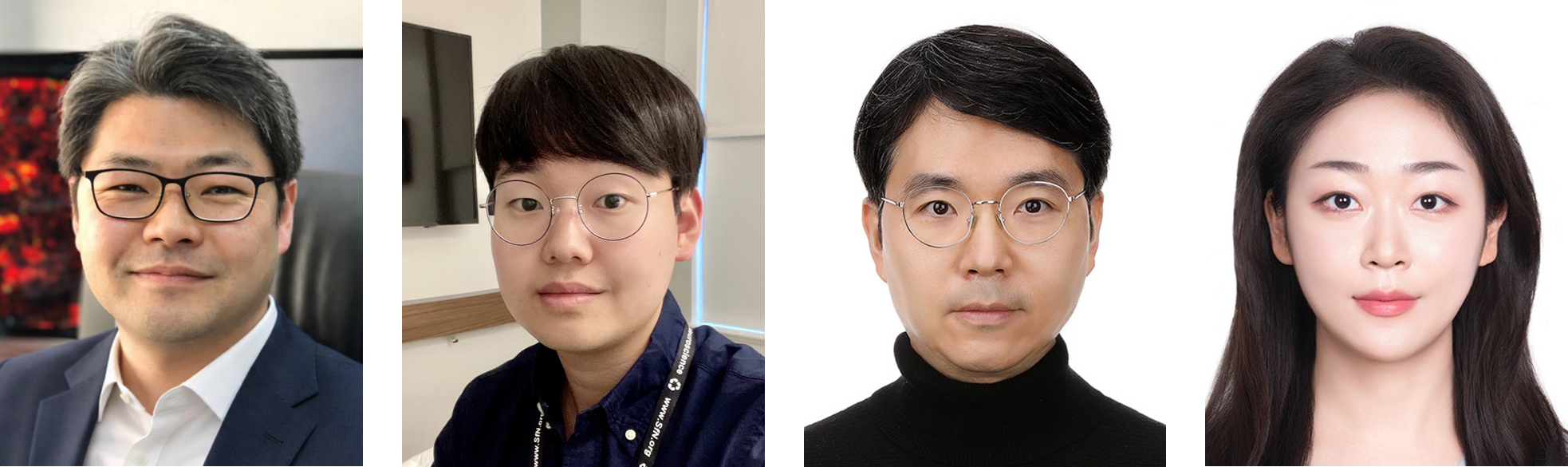
Dopamine Selects, Astrocytes Refine: A New Mechanism for Motor-learning Circuit Rewiring- Study reveals astrocytic MEGF10 as a key driver of dopamine- and activity-dependent synapse remodeling in the striatum - When we learn a new motor skill—whether mastering a piano passage or refining balance while walking—the brain must reorganize the circuits that control movement. For decades, this process of synaptic remodeling has been attributed primarily to neurons strengthening or weakening their connections. However, the new study reveals that another cell type in the brain called astrocytes actively participates in this rewiring process. A research team led by CHUNG Won-Suk (KAIST Department of Biological Sciences), Associate Director of the Center for Vascular Research within the Institute for Basic Science (IBS), and Professor KIM Jae-Ick at UNIST has demonstrated that astrocytes actively eliminate synapses in the striatum, a brain region that plays a central role in controlling voluntary movement and learning. This process is regulated by dopamine signaling and neural activity and is critical for proper motor skill acquisition. Although synapse formation and elimination have long been studied in the context of neuronal plasticity, increasing evidence suggests that glial cells—particularly astrocytes and microglia—also contribute to synapse turnover. Until now, however, the precise role of astrocytes in motor learning and the mechanisms underlying their synaptic remodeling remained unclear. To address this question, the researchers used mouse models undergoing repeated motor training tasks, including the rotarod test, which measures motor coordination and learning. Using advanced imaging tools that can track individual synaptic components, the team observed a marked increase in astrocyte-mediated synapse elimination as motor learning progressed. In contrast, other glial cell types, such as microglia and oligodendrocyte precursor cells, showed no significant changes under the same experimental conditions, indicating a specific role for astrocytes in this process. The researchers identified MEGF10, a phagocytic receptor expressed in astrocytes, as a key molecular mediator of this remodeling. When MEGF10 was selectively deleted in astrocytes, mice exhibited impaired motor learning and significant disruptions in communication between the motor cortex and the striatum. In addition, both long-term potentiation (LTP) and long-term depression (LTD)—two fundamental mechanisms of synaptic plasticity—were compromised. These results demonstrate that astrocyte-mediated synapse elimination is not merely a housekeeping function, but a necessary component of functional circuit refinement during learning. The team further investigated how astrocytes determine which synapses to remove and identified two major regulatory signals. First, increasing neuronal activity between the motor cortex and the striatum significantly enhanced astrocyte-mediated synaptic elimination (a process in which astrocytes engulf and remove synapses), indicating that circuit engagement promotes remodeling. Second, manipulating dopamine levels, a key neuromodulator for movement and reward, also strongly influenced astrocytic synapse elimination. Importantly, dopamine produced distinct structural changes in two major types of striatal projection neurons—D1 and D2 medium spiny neurons. Both these changes were found to be dependent on astrocytic MEGF10. The findings suggest that dopamine helps determine which neurons become more active during learning, while astrocytes reshape the circuit by selectively preserving stronger connections and removing weaker ones. This allows the astrocytes to help translate dopamine signals into lasting structural changes in motor circuits. By revealing an astrocyte-dependent mechanism underlying dopamine-driven circuit remodeling, the study provides new insight into how motor skills are acquired at the cellular level. Because dopamine signaling is disrupted in disorders such as Parkinson’s disease and addiction, understanding how astrocytes contribute to dopamine-regulated plasticity may inform future investigations into circuit dysfunction in these conditions. Associate Diretor CHUNG Won-Suk noted, “Learning depends on a precise circuit rewiring process that involves not only forming new synapses but also removing unnecessary connections. Our study systematically identifies astrocytic phagocytosis and MEGF10 as key players in this process.” This study was co–first authored by CHOI Young-Jin (IBS Center for Vascular Research) and Lina LEE Yeongeun (UNIST) and was published online in Nature Communications on February 23, 2026.
Notes for editors
- References
- Media Contact
- About the Institute for Basic Science (IBS) |
| before |
|---|
- Content Manager
- Public Relations Team : Yim Ji Yeob 042-878-8173
- Last Update 2023-11-28 14:20
55, Expo-ro, Yuseong-gu, Daejeon, Korea, 34126
Tel. +82-42-878-8114 | Fax. +82-42-878-8079 | E-mail. webmaster@ibs.re.kr
Copyright(c) IBS. All Rights Reserved.