주메뉴
- About IBS 연구원소개
-
Research Centers
연구단소개
- Research Outcomes
- Mathematics
- Physics
- Center for Underground Physics
- Center for Theoretical Physics of the Universe (Particle Theory and Cosmology Group)
- Center for Theoretical Physics of the Universe (Cosmology, Gravity and Astroparticle Physics Group)
- Dark Matter Axion Group
- Center for Artificial Low Dimensional Electronic Systems
- Center for Theoretical Physics of Complex Systems
- Center for Quantum Nanoscience
- Center for Exotic Nuclear Studies
- Center for Van der Waals Quantum Solids
- Center for Relativistic Laser Science
- Chemistry
- Life Sciences
- Earth Science
- Interdisciplinary
- Center for Neuroscience Imaging Research (Neuro Technology Group)
- Center for Neuroscience Imaging Research (Cognitive and Computational Neuroscience Group)
- Center for Algorithmic and Robotized Synthesis
- Center for Genome Engineering
- Center for Nanomedicine
- Center for Biomolecular and Cellular Structure
- Center for 2D Quantum Heterostructures
- Institutes
- Korea Virus Research Institute
- News Center 뉴스 센터
- Career 인재초빙
- Living in Korea IBS School-UST
- IBS School 윤리경영

주메뉴
- About IBS
-
Research Centers
- Research Outcomes
- Mathematics
- Physics
- Center for Underground Physics
- Center for Theoretical Physics of the Universe (Particle Theory and Cosmology Group)
- Center for Theoretical Physics of the Universe (Cosmology, Gravity and Astroparticle Physics Group)
- Dark Matter Axion Group
- Center for Artificial Low Dimensional Electronic Systems
- Center for Theoretical Physics of Complex Systems
- Center for Quantum Nanoscience
- Center for Exotic Nuclear Studies
- Center for Van der Waals Quantum Solids
- Center for Relativistic Laser Science
- Chemistry
- Life Sciences
- Earth Science
- Interdisciplinary
- Center for Neuroscience Imaging Research (Neuro Technology Group)
- Center for Neuroscience Imaging Research (Cognitive and Computational Neuroscience Group)
- Center for Algorithmic and Robotized Synthesis
- Center for Genome Engineering
- Center for Nanomedicine
- Center for Biomolecular and Cellular Structure
- Center for 2D Quantum Heterostructures
- Institutes
- Korea Virus Research Institute
- News Center
- Career
- Living in Korea
- IBS School



News Center

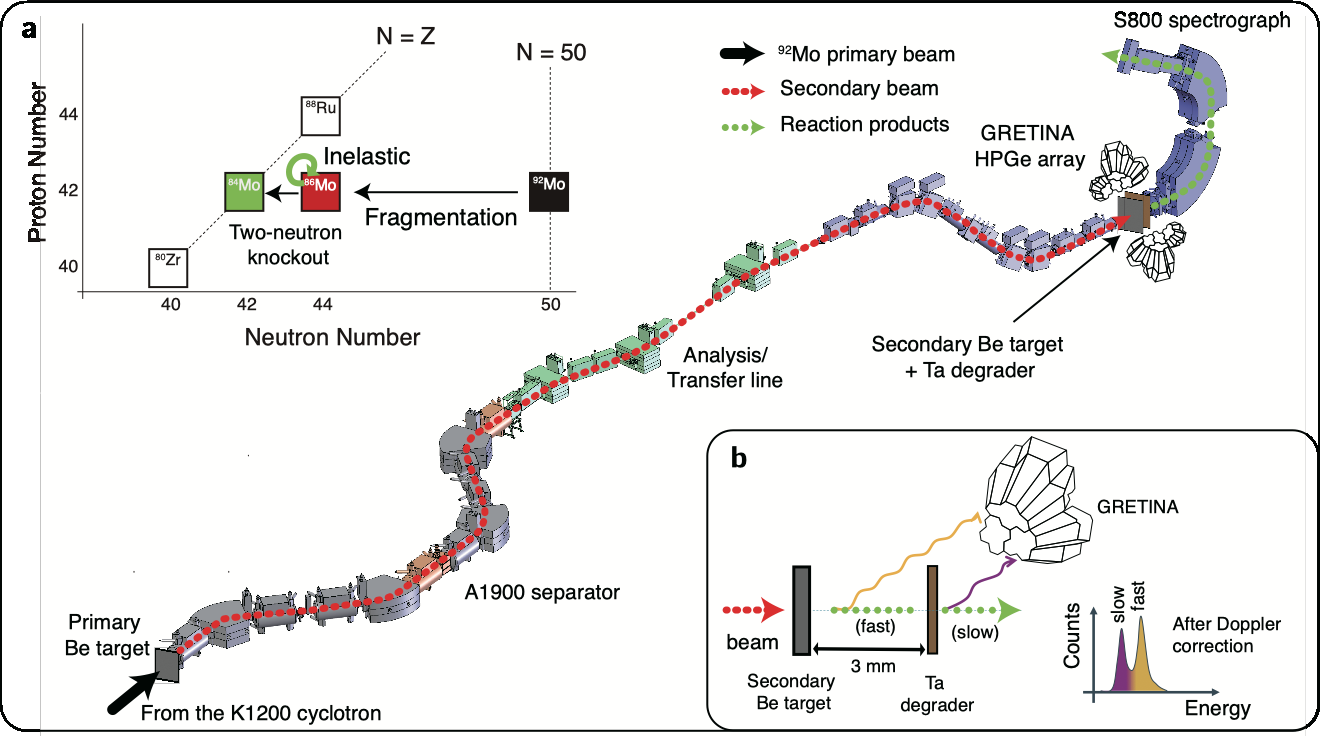
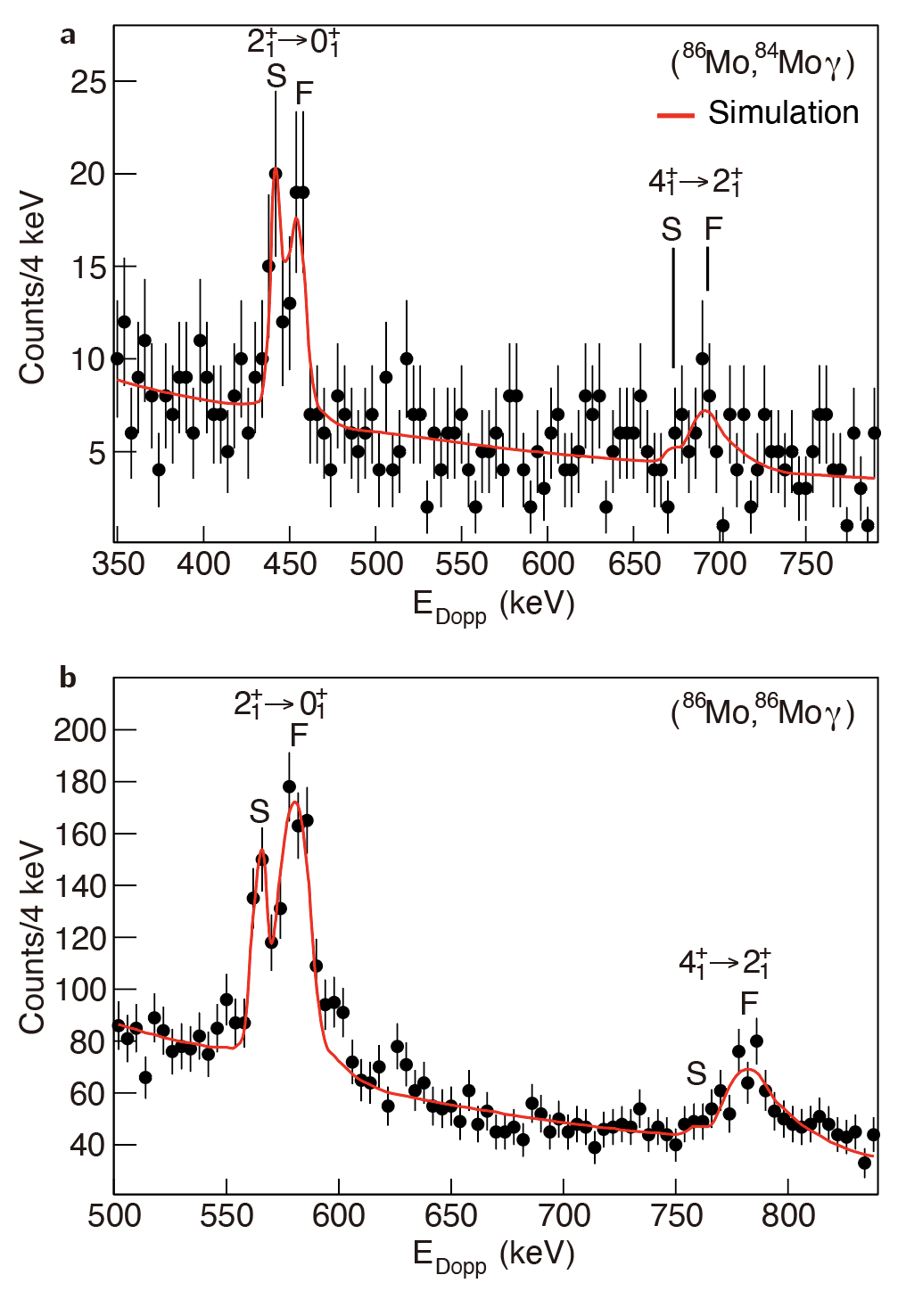
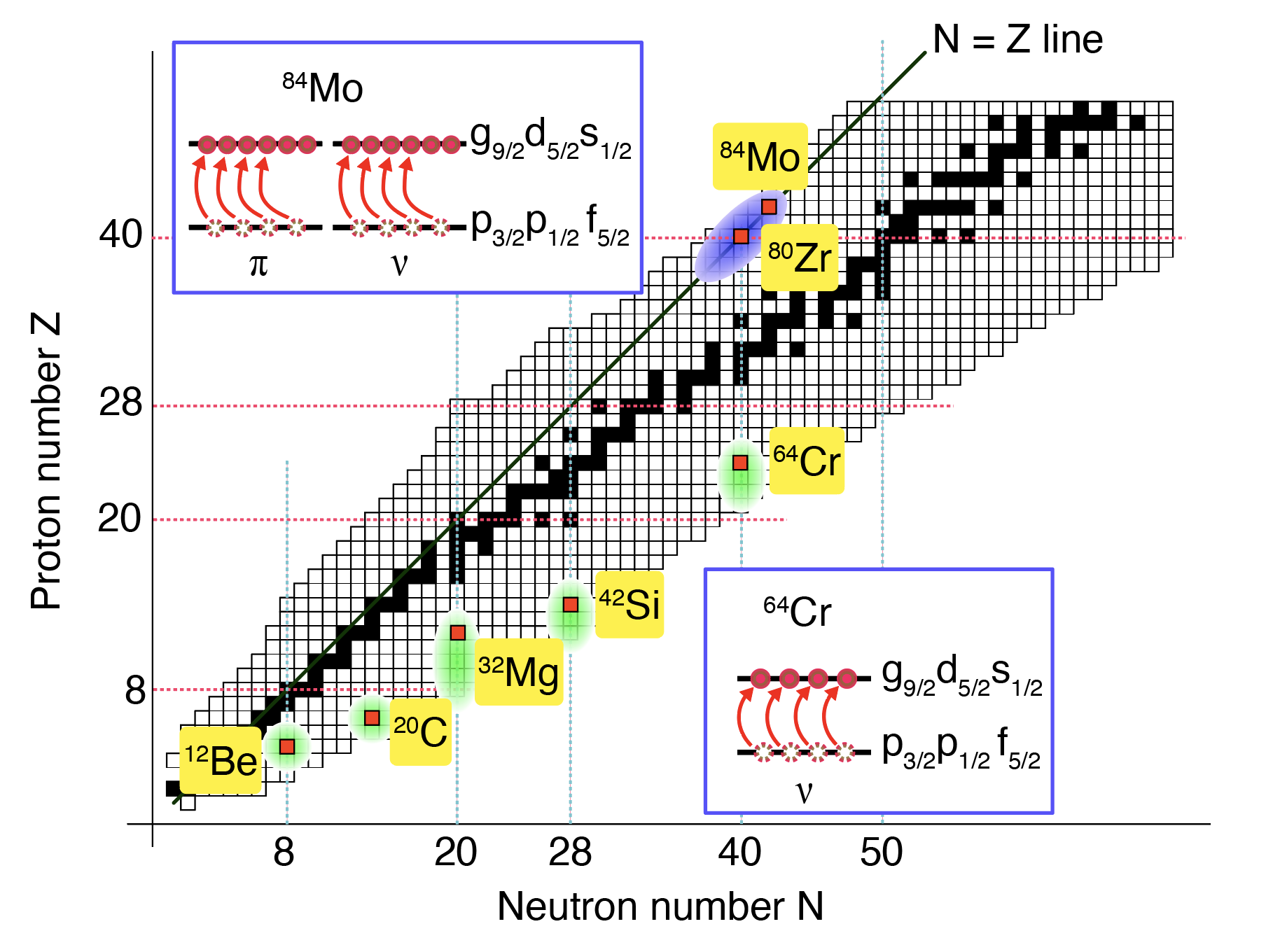
Scientists Discover New Nuclear “Island” Where Magic Numbers Break Down- Researchers discover an “Island of Inversion” in proton-neutron symmetric nuclei for the first time - For decades, nuclear physicists believed that “Islands of Inversion” — regions where the normal rules of nuclear structure suddenly break down — were found mostly in neutron-rich isotopes. In these unusual pockets of the nuclear chart, magic numbers disappear, spherical shapes collapse, and nuclei unexpectedly transform into strongly deformed objects. So far, all such islands found were exotic nuclei such as beryllium-12 (N = 8), magnesium-32 (N = 20), and chromium-64 (N = 40), all of which are far away from the stable nuclei found in nature. But now, a study recently carried out by an international collaboration of the Center for Exotic Nuclear Studies, Institute for Basic Science (IBS), University of Padova, Michigan State University, University of Strasbourg and other institutions have uncovered something no one had seen before: an Island of Inversion hiding in one of the most symmetric regions of all, where the number of protons equals the number of neutrons. The international collaboration investigated this phenomenon in two molybdenum isotopes: molybdenum-84 (Z = N = 42) and molybdenum-86 (Z = 42, N = 44). These nuclei lie along the N = Z line — an important but notoriously difficult region to study because such isotopes are hard to produce in the laboratory. Using rare-isotope beams at Michigan State University and highly sensitive gamma-ray detectors, the researchers measured the lifetimes of their excited states with picosecond precision. To create the necessary beams, the team produced fast-moving Mo-86 nuclei by bombarding a beryllium target with accelerated Mo-92 ions. An A1900 separator selected the desired fragments from the many produced in the collision. The Mo-86 beam then struck a second target, where some nuclei were excited or converted into Mo-84 by removing two neutrons. As these nuclei returned to their ground states, they emitted gamma rays that revealed details of their internal structure. These gamma rays were measured using GRETINA — a high-resolution germanium detector array capable of tracking individual gamma-ray interactions — and TRIPLEX, a device that allows the determination of extremely short lifetimes (on the order of trillionths of a second). Comparison with GEANT4 Monte-Carlo simulations enabled the team to extract the lifetimes of the first excited states and deduce the degree of nuclear deformation. The measurements revealed that Mo-84 behaves very differently from Mo-86, even though the two isotopes differ by only two neutrons. Mo-84 showed an exceptionally large degree of collective motion — a sign that many protons and neutrons are being promoted together across a major shell gap. Nuclear physicists describe this process as a “particle–hole excitation”: some nucleons jump to higher-energy orbitals (particles), leaving vacancies in the lower-energy orbitals (holes). The more nucleons that participate in these coordinated jumps, the more strongly deformed a nucleus becomes. Advanced calculations performed by the team explain this striking contrast. In Mo-84, both protons and neutrons undergo very large simultaneous particle-hole excitations — effectively an 8-particle-8-hole rearrangement — which produces a strongly deformed shape. This behavior arises from a special interplay between proton–neutron symmetry and the narrowing of the shell gap at N = Z = 40, making such coordinated excitations unusually easy. Importantly, the models show that this deformation cannot be reproduced without including three-nucleon forces, interactions in which three nucleons act together. Models that include only the traditional two-nucleon interaction fail to generate the observed structure. In contrast, Mo-86 shows modest 4p-4h excitations and therefore remains much less deformed. These combined findings show that Mo-84 resides inside a newly identified “Island of Inversion”, while Mo-86 lies outside it. The new “Isospin-Symmetric Island of Inversion” discovered through this study on the N = Z nuclide Mo-84 is the first case of Island of Inversion that appears in proton-neutron symmetric nuclei. This discovery challenges long-held assumptions about where structural inversions can occur and provides a new window into the fundamental forces that bind matter together.
Notes for editors
- References
- Media Contact
- About the Institute for Basic Science (IBS) |
| before |
|---|
- Content Manager
- Public Relations Team : Yim Ji Yeob 042-878-8173
- Last Update 2023-11-28 14:20

55, Expo-ro, Yuseong-gu, Daejeon, Korea, 34126
Tel. +82-42-878-8114 | Fax. +82-42-878-8079 | E-mail. webmaster@ibs.re.kr
Copyright(c) IBS. All Rights Reserved.