
- This event has passed.
Physical reservoir computing and beyond – Kohei Nakajima
October 7 @ 4:00 pm - 5:00 pm KST
Daejeon, Daejeon 34126 Korea, Republic of + Google Map
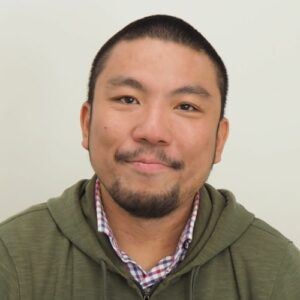
Modern computing has been fundamentally built upon the separation of hardware and software. This separation has enabled programs to be replicated and executed on interchangeable hardware, making computation effectively “immortal.” In contrast, recent approaches to physical computing seek to exploit the intrinsic dynamics of physical systems as computational resources, thereby crossing the abstraction layers that traditionally separate hardware from computation. Such computation is inherently tied to its physical substrate and can therefore be regarded as “mortal computation” (Hinton, 2022).
In this talk, I will introduce physical reservoir computing (PRC) as a representative framework for mortal computation, in which the intrinsic dynamics of physical systems perform information processing (Nakajima 2020). I will discuss how diverse physical substrates—including soft robots, neuromorphic devices, and living systems—can serve as computational resources, and how their embodiment can be exploited for sensing, computation, and control. I will then extend this perspective beyond reservoir computing to physicalizing deep learning, where not only inference but also learning processes are implemented in physical substrates. In particular, I will introduce a gradient-free approach to physical deep learning and discuss recent efforts to physicalize learning in neuromorphic devices and soft robots.
Through these examples, I will argue that physicalizing computation is not merely a strategy for developing energy-efficient and task-specific computing systems. It also provides a new perspective on intelligence and learning in systems whose physical dynamics are intrinsically time-varying, adaptive, and ultimately mortal.
Zoom : 997 8258 4700 (pw : 1234)